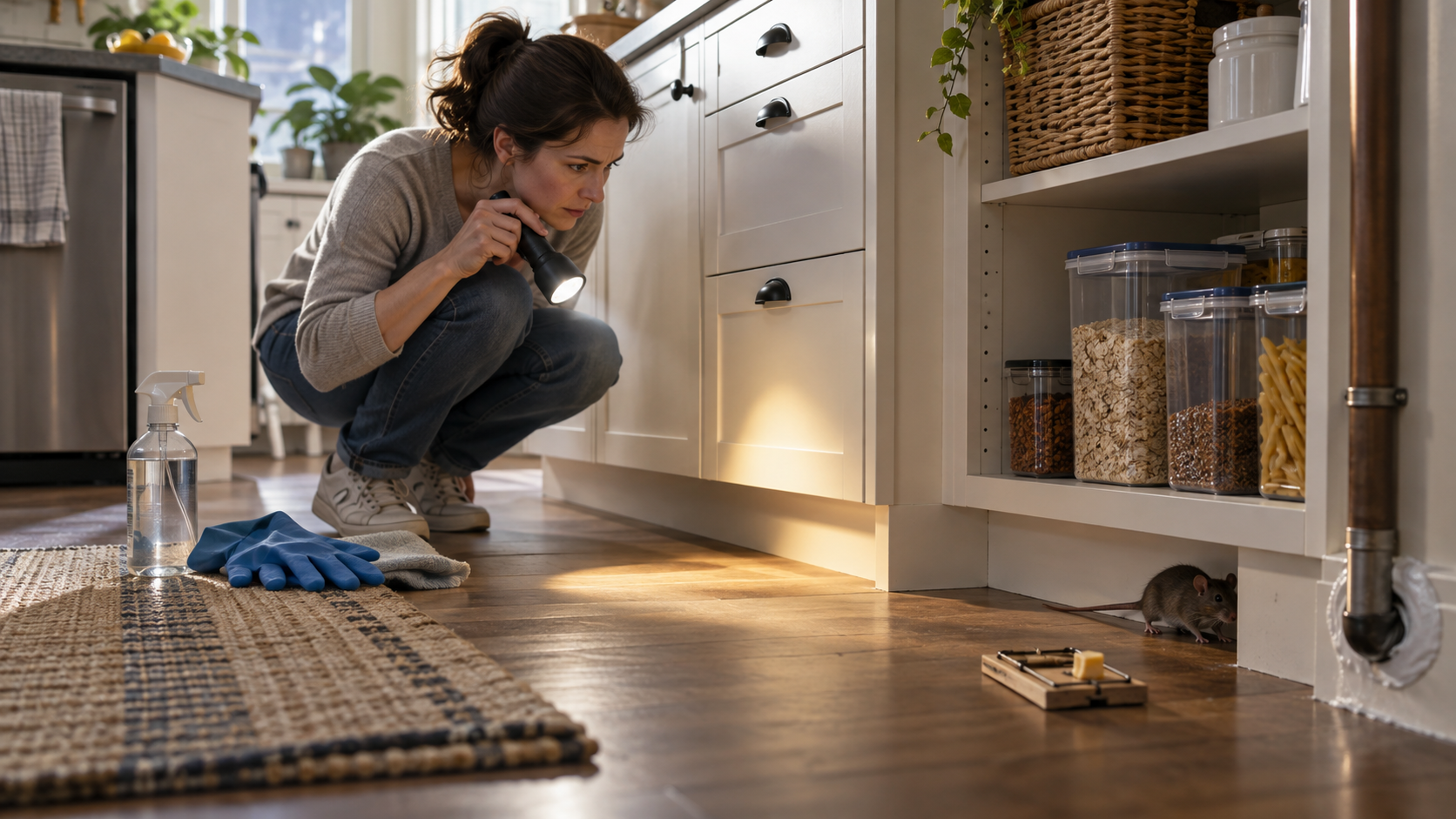
Hearing scratching behind a wall at 2 a.m. is one of those sounds nobody wants to recognize. Then you notice a torn food package, a few dark droppings near the pantry, or something suspicious behind the refrigerator. At that point, the question becomes pretty urgent: how do you get rid of rats in the house, and how fast can it be done?
The good news is that one rat sighting does not automatically mean your home is overrun. The bad news? Rats are excellent at staying out of sight. Waiting to see whether the problem disappears on its own usually gives them more time to find food, water, and a comfortable nesting area.
If you are searching for how to get rid of rats in house, the most effective approach is not one magic trap or one strong-smelling product. You need to do several things at the same time: remove what attracts rats, close their routes into the home, trap the animals already inside, and clean contaminated areas safely.
It sounds like a lot, but once you break it into steps, the job becomes much more manageable.
First, Make Sure You Really Have Rats
Rats are mostly active when a house is quiet, so you may never see one running across the kitchen. Often, the clues show up first.
Droppings are one of the most obvious signs. Rat droppings tend to be considerably larger than mouse droppings. You might find them along walls, behind appliances, under sinks, inside cabinets, in basements, or near stored food.
There are other clues too:
- Gnaw marks on food packaging, wood, wires, plastic, or cardboard
- Scratching or movement inside walls, ceilings, attics, or crawl spaces
- Greasy rub marks along walls or baseboards where rodents repeatedly travel
- Shredded paper, fabric, insulation, or other nesting material
- Pet food bags or pantry packages that suddenly have holes in them
- A musky or unusual odor in enclosed areas
- Food that seems to disappear or gets scattered overnight
A daytime sighting deserves attention as well. Rats generally prefer moving around when they feel less exposed, so repeatedly seeing them in open areas can point to a larger problem or strong competition for food and shelter.
Why Rats Come Into American Homes
Rats are not particularly interested in whether a home is spotless, stylish, old, or newly renovated. They are looking for the basics: food, water, warmth, and shelter.
A clean home can still get rats if there is an opening near a foundation, a gap around plumbing, an accessible garbage area outside, or pet food left within reach.
Season also matters. During periods of colder weather, heavy rain, construction, flooding, or changes in outdoor food supplies, rodents may start exploring new shelter. In many parts of the United States, homeowners notice more rodent activity as temperatures begin to drop.
| What Attracts Rats | Common Example | What to Do |
|---|---|---|
| Easy food | Open cereal boxes, crumbs, pet food | Store food in sturdy containers with tight lids |
| Water | Leaking pipe, pet bowl, dripping faucet | Repair leaks and remove unnecessary standing water |
| Shelter | Cardboard, clutter, stored fabric | Reduce clutter and inspect storage areas |
| Outdoor food | Garbage, birdseed, fallen fruit | Secure trash and clean the surrounding area |
| Entry points | Gaps around pipes, doors, vents, foundation | Seal openings with rodent-resistant materials |
And here is the part people often miss: killing the rats without fixing these conditions may give you only temporary relief. If your home still offers food and an easy entrance, another rat can simply take the first one’s place.
Step One: Cut Off the Food Supply
A rat does not need a beautifully stocked pantry. A few reliable calories every night are enough to make your home worth revisiting.
Start in the kitchen, but do not stop there. Check the garage, basement, mudroom, patio, and anywhere pet supplies are stored.
Dry foods such as cereal, flour, rice, pasta, nuts, and pet food should be kept in sturdy containers with secure lids. Thin bags and cardboard boxes are not much of a barrier to a rat.
Clean crumbs from beneath the stove, refrigerator, toaster, and kitchen cabinets. Those hidden spots are easy to forget because we do not see them every day. Rats have no such problem.
Also pay attention to the nightly routine. A sink full of dishes, open trash, food left on the counter, or a pet bowl containing kibble can become a predictable buffet.
For a couple of weeks, be almost annoyingly strict about food:
- Put away pet food before going to bed
- Wipe counters and sweep up food debris after dinner
- Keep indoor trash in a container with a fitted lid
- Do not leave fruit or snacks exposed overnight
- Store bulk foods in thick plastic, glass, or metal containers
- Clean grills and outdoor eating areas after meals
- Pick up fallen fruit, spilled birdseed, and other food around the yard
This alone usually will not remove an established rat, but it makes every other control method much more effective. A hungry rat is far more interested in the bait on your trap than one that has three easier dinner options.
Step Two: Find Out How the Rats Are Getting In
This is where many DIY attempts fall apart. People set traps but leave the front door open, figuratively speaking.
Walk through the house slowly and look at it from a rat’s perspective. Pay particular attention to places where utility lines, water pipes, drains, vents, and cables enter the structure.
Look behind kitchen cabinets and appliances, around doors, near the foundation, inside the garage, in the attic, around crawl spaces, and beneath sinks.
Do not assume an opening is too awkward to matter. Rodents are remarkably good climbers and can take advantage of spaces that homeowners barely notice.
For small gaps, steel wool combined with caulk can help block access. Larger openings may require metal mesh, hardware cloth, sheet metal, cement, or another durable material that rodents cannot easily chew through.
Expanding foam by itself is not always a reliable long-term rat barrier because rodents can damage softer materials. If foam is part of a repair, it is smarter to combine it with something resistant to gnawing.
Should You Seal Every Hole Immediately?
Usually you want entry points closed, but there is a practical wrinkle. If rats are already living inside walls, an attic, or another enclosed space, sealing every possible exit without a trapping plan can leave animals trapped inside the structure.
That is one reason a serious infestation is often better handled by a pest-control professional. They can identify active travel routes and coordinate exclusion with trapping.
For a straightforward household problem, though, sealing obvious exterior openings while trapping the rats already indoors is a solid strategy.
Step Three: Set the Right Traps
Traditional snap traps remain one of the main options for controlling rats around a home. They work quickly when they are correctly sized, correctly placed, and actually located where rats travel.
A mouse trap is not a rat trap. Buy a trap specifically designed for rats.
Location matters more than people think. Rats tend to travel close to walls and objects rather than sprinting through the middle of an open room. That means putting one lonely trap in the center of a garage is unlikely to impress anybody, rat included.
Place traps along walls near droppings, gnawing, nesting material, or other evidence of activity. Areas behind refrigerators and stoves, the backs of cabinets, basements, attics, and secluded utility areas are typical places to investigate.
Position a snap trap according to its instructions, with the baited end close to the wall. Keep every trap completely inaccessible to children and pets.
What Is the Best Bait for a Rat Trap?
Peanut butter is a familiar choice because it smells appealing and sticks to the bait area. Only a small amount is needed. Depending on what the rats have already been eating, other foods can work too.
But sometimes a perfectly baited trap sits untouched for days.
That does not necessarily mean the rats are gone.
Rats can be cautious around new objects. If they have been using the same route for weeks and a strange device appears overnight, they may avoid it. One option is pre-baiting: place bait on an unset trap for a period, then set the trap after rats begin taking the food.
It feels counterintuitive because everyone wants the rat gone tonight. But with a cautious animal, a little patience can make the trap far more effective.
| Method | Advantages | Important Consideration |
|---|---|---|
| Rat-size snap traps | Fast, reusable, easy to monitor | Must be placed safely away from children and pets |
| Pre-baited snap traps | Can help with cautious rats | Requires patience before setting the trap |
| Rodenticide bait station | May help with persistent infestations | Requires strict label compliance and protection of pets, children, and wildlife |
| Professional pest control | Useful for large, hidden, or recurring infestations | Costs more but can address structural entry points too |
What About Glue Traps and Live Traps?
They may sound simpler, but they are not the preferred approach for a rat problem in a home.
Current public-health guidance in the United States favors appropriately sized snap traps for household rodent control and advises against glue traps and live traps. One concern is that frightened, trapped rodents may urinate, potentially increasing exposure to contaminated waste.
Live trapping creates another headache: now you have a live wild rat to handle and relocate. Even if it is released, it may return if entry points remain open.
So, despite all the clever gadgets available online, basic rat-size snap traps remain surprisingly hard to beat.
Should You Put Rat Poison Inside the House?
Rodenticide can have a role in persistent infestations, but this is an area where improvisation is a bad idea.
Never scatter loose poison around a home. Consumer rodenticide products should be handled exactly according to the label, and bait must stay out of reach of children and pets. Tamper-resistant bait stations provide an additional layer of protection.
There is also a practical downside to killing a rat with poison somewhere you cannot see. The animal may die inside a wall, crawl space, or ceiling. Then you may end up searching for the source of a very unpleasant odor.
Poison can also pose risks to pets or wildlife if a product is mishandled or if a dead poisoned rodent is eaten. Dead rodents should therefore be removed promptly when found.
If snap traps and exclusion are not working, or you are considering rodenticide in a household with small children or animals, professional pest control starts looking much more attractive.
Step Four: Clean Rat Droppings the Safe Way
This part is important.
Do not grab a broom and start sweeping dry rat droppings across the floor. And do not immediately vacuum them up.
Rodent urine, droppings, saliva, and nesting materials can carry germs. Disturbing dry contaminated material can send tiny particles into the air.
Instead, ventilate the area before cleaning when appropriate, put on rubber or plastic gloves, and thoroughly wet the droppings and urine with a household disinfectant labeled as a disinfectant.
A freshly prepared bleach solution can also be used where suitable. Current CDC guidance describes a mixture of one part household bleach to nine parts water. Never mix bleach with ammonia or other household cleaning chemicals.
Let the disinfectant remain on the contaminated material for about five minutes, or follow the contact time stated on the disinfectant label. Then wipe everything up with paper towels and place the waste in a covered garbage container.
Afterward, disinfect the surrounding hard surface.
A sensible cleanup routine looks like this:
- Ventilate enclosed areas before cleaning when needed
- Wear rubber or plastic gloves
- Wet droppings and urine thoroughly with disinfectant
- Allow enough contact time for the product to work
- Wipe the material up rather than sweeping it dry
- Disinfect the surrounding floor, cabinet, shelf, or countertop
- Wash gloved hands before removing the gloves, then wash bare hands with soap and warm water
A heavily contaminated attic, crawl space, abandoned building, or room containing large amounts of droppings is a different situation. That may require additional protective equipment and professional cleanup rather than a normal Saturday morning cleaning session.
How Do You Dispose of a Dead Rat?
Do not pick it up with bare hands.
Wear gloves and spray the dead rodent and the immediate surrounding area with disinfectant. Allow the product adequate contact time. Follow local waste rules for disposal and the instructions applicable to the disinfectant or pest-control product you are using.
Clean and disinfect the contaminated area afterward, then wash your hands carefully.
If a pet has touched or eaten a poisoned rat, contact a veterinarian promptly rather than waiting for symptoms to appear.
How Long Does It Take to Get Rid of Rats?
There is no useful universal answer such as “three days.” A single rat with an obvious entry point is very different from a colony nesting behind the walls of a multi-unit building.
What you can do is track activity.
Check traps every day. Look for fresh droppings, new gnaw marks, disturbed food, and new sounds. The CDC notes that if no rodents are trapped for a week and you see no new signs of rodent activity, that is a good indication the rodents are gone.
If fresh evidence continues after a week of consistent trapping, take that seriously. You may have multiple rats, poorly placed traps, an overlooked food source, or an entry point you have not found yet.
Why Rats Keep Coming Back
This is perhaps the most frustrating version of the problem: you catch a rat, enjoy two quiet weeks, and then the scratching begins again.
Usually, something in the environment has not changed.
Maybe there is still a gap beside an exterior pipe. Maybe the garage door does not close tightly. Maybe neighbors have a shared garbage area that attracts rodents. In an apartment building, rats may move through service spaces, basements, pipe chases, and neighboring units.
In other words, catching the animal is only half the job. Rat control that lasts is mostly about making the building difficult to enter and unrewarding once they get there.
Do Ultrasonic Rat Repellents Work?
This is tempting because plugging something into an outlet is much easier than crawling behind the refrigerator with a flashlight.
Unfortunately, a repellent gadget should not replace proven control measures such as sealing entry points, removing food sources, cleaning up waste, and trapping rodents already inside.
Even when a sound or smell temporarily changes a rat’s behavior, that does not necessarily remove an established infestation. If there is reliable food and shelter available, those incentives are pretty strong.
The same applies to peppermint oil, ammonia smells, mothballs, and the endless collection of homemade tricks shared online. Some smells may be unpleasant to rodents, but they do not solve the reason the rats are inside.
Think structural fix, not magic smell.
How to Keep Rats From Returning
Once the house goes quiet, keep doing occasional checks. It takes much less effort to stop one new visitor than to deal with an established infestation.
Inspect areas around utility lines and plumbing. Keep garages and storage areas reasonably organized. Fix water leaks. Store pet food securely. Keep trash containers closed and in good condition.
Outside, clean up conditions that provide food or shelter. Overgrown vegetation against a structure, piles of junk, poorly managed garbage, animal feed, and easy nesting areas can make the property more attractive.
This does not mean your yard needs to resemble a sterile parking lot. It simply means there should not be a five-star rat hotel sitting against your foundation.
When Should You Call a Pest-Control Professional?
DIY rat control is reasonable when the activity appears limited, you can identify likely entry points, and traps are working.
Professional help makes more sense when you repeatedly see rats, continue finding fresh droppings despite trapping, hear activity inside inaccessible walls or ceilings, cannot identify the entrance, or live in a building where the problem may extend beyond your unit.
Also consider professional help if there is a heavy accumulation of rodent waste. Cleaning a couple of droppings beneath a sink is not the same as entering an attic with widespread contamination.
If you rent your home, document the problem with photos and dates and notify your landlord or property manager promptly. Responsibility for pest control varies by situation and local law, but structural defects and building-wide infestations often cannot be solved from inside one apartment.
FAQ
What is the fastest way to get rid of rats in the house?
Start several measures at once. Remove accessible food, locate and seal entry points, and set properly sized snap traps along active rat routes. One trap alone may catch a rat, but it will not stop another one from entering through the same hole.
Will rats leave if there is no food?
Removing food makes a home much less attractive and improves trapping success, but an established rat may not simply walk out. It may still have access to food elsewhere, stored food you overlooked, water, or nesting shelter. Combine sanitation with trapping and exclusion.
Where do rats hide during the day?
They commonly stay in quiet, protected areas such as wall voids, attics, basements, crawl spaces, storage areas, garages, and spaces behind cabinets or appliances. The exact location depends on the structure and where food and water are available.
Can I vacuum rat droppings?
Do not vacuum dry droppings before they have been properly disinfected. Wet the contaminated material thoroughly with an appropriate disinfectant first and follow safe cleanup procedures. Dry sweeping or vacuuming can disturb contaminated particles.
What food attracts rats the most?
Rats are flexible eaters. Pet food, grains, nuts, meat scraps, fruit, garbage, birdseed, and many common pantry foods can attract them. The bigger issue is usually not finding their favorite food but removing every reliable source they can reach.
Does seeing one rat mean there are more?
Not necessarily. One sighting cannot tell you the size of the infestation. But it is enough reason to inspect the property for droppings, gnaw marks, nesting material, entry points, and additional activity instead of assuming the rat was simply passing through.
How do I know when the rats are gone?
Watch for fresh evidence rather than relying only on sounds. If traps remain empty for about a week and you see no new droppings, gnawing, urine spots, damaged food, or other signs of activity, that is a strong indication that the indoor problem has been resolved. Continue checking entry points afterward.
Conclusion
Figuring out how to get rid of rats in house is less about finding the strongest poison or the cleverest gadget and more about taking away everything that makes the house useful to a rat.
Start with food and water. Find the openings. Seal them with materials rodents cannot easily destroy. Place rat-size snap traps where the animals actually travel, not wherever there happens to be empty floor space. And when you find droppings, clean them wet with disinfectant rather than sweeping or vacuuming them dry.
Then keep watching.
If activity stops, great – maintain the repairs and basic prevention habits. If fresh signs keep appearing, do not spend months moving the same trap from corner to corner. Persistent activity usually means there is something bigger going on: more rats, another entrance, a hidden nesting area, or a problem that extends beyond your home.
That is the moment when professional pest control earns its keep.
Rats are persistent, but they are not mysterious. Remove the food, block the routes, trap the animals already inside, and keep the environment unattractive to the next one. That simple combination is what turns a temporary fix into a house that stays rat-free.
Leave a Reply