
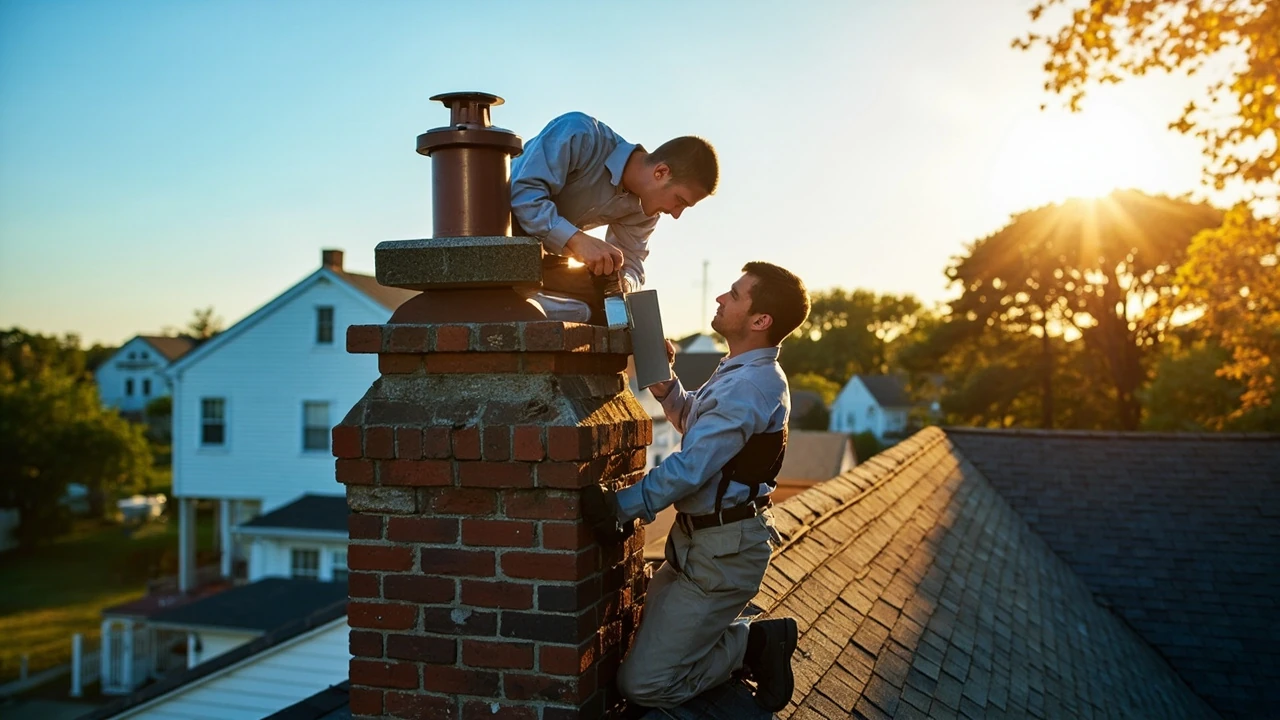
Chimney company Bellmore: how to pick the right crew for your home
A wood-burning fireplace on the South Shore of Long Island looks calm from the living room, but the masonry and metal work above the roofline take a beating every year from salt air, nor’easters, and freeze-thaw cycles. A single hairline crack in a flue liner, a rusted chase cover, or a creosote-packed smoke chamber can turn a cozy fire into a carbon monoxide call. That is why choosing a chimney company Bellmore homeowners trust is less about who can show up fastest and more about who can actually evaluate the system end to end and stand behind the work.
Bellmore sits in a part of Nassau County where many homes were built between the 1940s and the 1970s, which means a large share of the chimneys in the area have been in service for several decades. Some have original clay tile liners, others were relined with stainless steel at some point, and many have a mix of original and replaced components at the crown, flashing, and cap. A reputable chimney company Bellmore residents hire should be able to read that history quickly and explain what is original, what was repaired, and what is now a safety concern.
What a full-service chimney company in Bellmore actually does
The term “chimney company” covers a surprisingly wide range of work, and it helps to separate routine maintenance from repair and from emergency response. Most homeowners only think about the chimney when something goes wrong, but the bulk of professional work is preventive.
Routine services include:
- Level 1 visual inspection during an annual cleaning
- Sweeping to remove creosote, soot, and animal debris from the flue
- Cap, crown, and damper checks
- Basic safety verification of the firebox and smoke chamber
Repair services go deeper and usually require either a Level 2 inspection (with a camera scan) or a partial teardown:
- Tuckpointing and brick replacement on the exterior stack
- Crown reconstruction with a proper mortar mix or cast crown
- Flashing repair or replacement where the chimney meets the roof
- Stainless steel liner installation when the original clay tile is cracked
- Chase cover replacement on prefabricated chimneys
- Damper repair or top-mount damper installation
Emergency and specialty work covers what tends to bring people to a search bar in the first place:
- Chimney fires and post-fire damage assessment
- Water leaks during or after coastal storms
- Smoke spillage back into the living space
- Visible cracking, leaning, or spalling brick
- Animal intrusions, including nesting material blocking the flue
A chimney company Bellmore homeowners can rely on should describe its scope in plain language, not in vague phrases like “chimney solutions.” The cleaner the menu of services, the easier it is to compare companies side by side.
Why Bellmore homes need chimney-specific expertise
Coastal Long Island weather creates a specific set of stresses on masonry chimneys. Salt-laden air accelerates corrosion of metal components such as caps, chase covers, and damper assemblies. Moisture driven by nor’easters works into mortar joints and, when it freezes, expands enough to spall the face off a brick. Wind-driven rain can also pool at the chimney crown, especially on chimneys with no overhang or with a poorly sloped original pour.
Inside the flue, the situation is different but related. Many Bellmore homes heat with fireplaces or wood stoves as a secondary or supplemental heat source, and burning even well-seasoned wood still produces creosote. When the system is oversized for the firebox, creosote can build up as a hard, glazed layer that is difficult to remove with a basic brush sweep. A trained technician will know to look for this and to use the right tools.
Because of this combination of coastal exposure and older housing stock, a chimney company Bellmore property owners hire should be familiar with three things in particular: how to spot early-stage spalling before it becomes structural, how to evaluate a crown for the right slope, and how to size and condition a stainless liner for safe use with modern appliances.
How to evaluate a chimney company before booking
Credentials, documentation, and inspection quality are the three areas that separate a professional operation from a general handyman with a brush. The list below is a practical filter homeowners can use before signing anything.
| Check | What to look for | Why it matters |
|---|---|---|
| Certifications | CSIA-certified sweeps, NFI credentials for inspectors, or equivalent | Indicates training on current NFPA 211 guidance |
| Insurance | General liability and workers’ comp, with proof on request | Protects homeowner if a tech is injured on the roof |
| Inspection levels | Clear explanation of Level 1, Level 2, and Level 3 | Lets you know when a camera scan is included |
| Documentation | Written report with photos, before and after | Supports insurance claims and home sales |
| Scope of services | Covers cleaning, repair, liner, masonry, and emergency | Reduces need to rehire for adjacent issues |
| Local references | References from Bellmore, Merrick, Wantagh, or Massapequa | Confirms familiarity with local housing stock |
Two practical checks are often overlooked. First, ask whether the company uses drop cloths and a high-powered vacuum during sweeping, or whether soot is allowed to travel through the house. Second, ask who actually performs the inspection. A Level 2 inspection that includes a camera scan should be done by a technician who is trained to interpret what the camera shows, not just someone running a cable down the flue.
Common chimney problems in Bellmore homes
Patterns repeat across coastal Long Island. The list below is not a diagnosis, but it reflects the issues a qualified Bellmore chimney company sees most often.
- Spalling brick faces on the upper third of the stack, caused by moisture and freeze-thaw cycles
- Cracked or missing mortar at the crown, leading to slow water entry
- Rusted chase covers on prefabricated chimneys, often after 10 to 15 years
- Damaged or missing chimney caps that allow water and animal entry
- Flashing separation where the chimney meets the asphalt or modified bitumen roof
- Creosote glaze from low-temperature, smoldering fires in older fireplaces
- Smoke chamber parging that has deteriorated, creating rough surfaces that ignite creosote
Several of these issues can sit quietly for years and only become visible during a Level 2 inspection, which is one reason the National Fire Protection Association and most safety organizations recommend an annual evaluation for any chimney used for solid fuel burning.
What to expect during a typical service visit
A well-run visit is predictable, which is part of why it is worth hiring a company with a defined process. The steps below are what a homeowner should see on a standard cleaning and inspection day.
- A pre-visit confirmation of the scope, the technician’s name, and a time window
- Floor and furniture protection set up before any tools come inside
- A Level 1 visual inspection of accessible portions, plus a top-to-bottom look at exterior masonry
- Mechanical sweeping with brushes sized to the flue, combined with HEPA filtration
- A camera scan if creosote buildup, damage, or a real estate transaction is involved
- Documentation with photos, a written condition report, and clear next steps
- Honest discussion of any repairs, with pricing and timing before work begins
If any step is rushed or skipped, that is a signal worth raising. A chimney that was not actually inspected is not the same as a chimney that was cleaned.
Comparing service models: solo sweeps, multi-crew firms, and franchise outfits
Bellmore homeowners will find three general business models, each with trade-offs.
| Model | Strengths | Watch points |
|---|---|---|
| Solo certified sweep | Personal accountability, often long-term relationships | Limited capacity for emergencies, narrow service menu |
| Multi-crew local company | Broad services, same-day response, internal training | Quality varies by crew, ask who is on site |
| Regional or franchise outfit | Standardized pricing, broad scheduling, marketing reach | Higher overhead, technicians may be less senior |
For routine cleaning, a solo or small crew is often the most cost-effective. For complex masonry, relining, or post-fire work, a multi-crew company with masons on staff is usually the better fit. For real estate or insurance-driven inspections, the choice depends on who can deliver a Level 2 report that satisfies the requesting party.
How pricing typically works in this market
Pricing varies with the type of service, the height and condition of the chimney, and whether repairs are bundled with cleaning. The list below is a general structure, not a quote.
- Level 1 cleaning and inspection for a single flue on a standard ranch or Cape is usually the base service
- Multi-flue systems, taller stacks, or steep roofs add time and equipment cost
- A camera scan is often priced separately because of the equipment and the time to document findings
- Repair work is typically quoted after the inspection, with line items for materials and labor
- Emergency visits outside normal hours carry a premium and may include a minimum trip charge
A trustworthy chimney company Bellmore residents can compare easily should be willing to provide a written scope with line items rather than a single bundled number, and to explain what happens if hidden damage appears once a crown is opened or a liner is removed.
Questions worth asking before signing a work order
The best protection for a homeowner is a clear set of questions, asked before the work begins. The list below is a starting point and can be adapted to the specific scope of work.
- Who will be on site, and what certifications do they hold
- Is the company licensed and insured in New York, and can documentation be provided
- What inspection level is included with the quoted service
- Will a written report with photos be provided after the visit
- What warranties apply to cleaning, repair, and liner work
- How are surprise findings handled once the work has started
- What is the response time for an emergency call or a chimney fire
- Are references from recent Bellmore or nearby South Shore jobs available
A company that answers these questions directly, in writing, is generally a company that will document the work the same way.
How chimney care ties into broader home maintenance
Chimney condition does not exist in isolation. Flashing connects to roof condition, smoke spillage relates to HVAC airflow, and creosote management connects to how the fireplace is actually used. Homeowners who already keep a broader home maintenance checklist often find that chimney work fits into the same rhythm, with annual fall service and a visual check after major coastal storms.
For a wider view of how a home’s mechanical systems are inspected and maintained, a look at car inspection: what it covers, what to expect, and how to prepare offers a useful parallel, since the same logic of regular, documented evaluation applies. Homeowners preparing a property for sale can also review Getting House Ready to Sell Checklist: Where Do You Start? to see where a Level 2 chimney inspection typically lands in a pre-listing plan.
Red flags when comparing Bellmore chimney companies
Not every warning sign is obvious, especially for a homeowner who only deals with the chimney every few years. The list below captures patterns that have shown up repeatedly in consumer complaints in this trade.
- Pressure to commit to a multi-service package before an inspection has been performed
- No written report, only a verbal summary
- Pricing that is significantly lower than competitors, often paired with upsells once on site
- Refusal to provide proof of insurance or certification on request
- Quotes given over the phone for repair work that should require an inspection first
- No local references and no verifiable address
Any one of these is a reason to slow down. Two or more is a reason to keep looking.
Safety, codes, and what governs chimney work in New York
Chimney work in New York is shaped by the building code, by manufacturer instructions for appliances, and by the National Fire Protection Association’s standard for chimneys, fireplaces, vents, and solid fuel-burning appliances. Local code adoption can lag the national standard, so a company that follows current national guidance is generally the safer choice, particularly for relining and appliance changes.
For broader context on how chimneys and fireplaces fit into building construction history, the English Wikipedia article on chimneys provides a useful overview of chimney types, components, and the evolution of safety standards. For a sense of how a local company applies these standards in Bellmore specifically, the Ageless Chimney team has described their approach to chimney service in Bellmore, NY, with an emphasis on local coastal conditions and a documented inspection process.
A practical seasonal rhythm for Bellmore homeowners
A predictable schedule reduces both risk and surprise costs. The list below is a workable rhythm for a typical South Shore home that uses its fireplace as a supplemental heat source.
- Late summer or early fall: Level 1 inspection and cleaning, ahead of the first sustained use
- Mid-season if the fireplace is used weekly: a quick visual check for creosote glaze and ash buildup
- After any major coastal storm: an exterior visual check of the crown, cap, and flashing
- Spring: a second light cleaning if the fireplace saw heavy use, before the system sits idle
- Every two to three years, or before a real estate transaction: a Level 2 inspection with a camera scan
This rhythm assumes an average system in average condition. A home with a wood stove as a primary heat source, or a chimney that has had prior damage, will need more frequent attention.
How to think about a quote that feels too high or too low
Pricing for chimney work is influenced by labor, equipment, materials, insurance, and overhead. A quote that is much lower than the field often means the company is cutting one of those corners, which is why the line items matter as much as the total. A quote that is much higher should come with a clear explanation of what is included, what materials are specified, and what warranty applies.
The most useful comparison between companies is on three points: what inspection level is included, what documentation is provided, and what warranty is offered. When those three align, the total price is usually fair.
Bringing it all together for your home
A chimney is a system, and the right chimney company Bellmore homeowners hire is the one that treats it that way. That means an annual inspection, a written report, a camera scan when the situation calls for it, and a clear path from cleaning through repair. It also means pricing that is transparent, documentation that survives an insurance call, and a crew that can explain what they are doing in plain language.
For most homes on the South Shore, the practical next step is to book a Level 1 cleaning and inspection in the fall, ask for a written report with photos, and keep that report on file. If the report flags any repair work, get a second opinion before approving anything beyond basic masonry patching. Chimney work is a long-term relationship more than a one-time transaction, and the right company will be the one that earns that relationship year after year.
Frequently asked questions
How often should a Bellmore chimney be inspected?
At least once a year, ideally before the heating season, and any time the system has been exposed to a chimney fire, a major coastal storm, or a change in fuel type or appliance.
What is the difference between a Level 1 and a Level 2 inspection?
A Level 1 inspection is a visual check of accessible portions of the chimney and is usually paired with a routine cleaning. A Level 2 inspection adds a camera scan of the flue and is required for real estate transactions, after a change in appliance, or after an event that may have caused damage.
Do I need a chimney company if I rarely use my fireplace?
Yes. Even a rarely used chimney can develop water damage, animal intrusion, or masonry issues, and most home insurance policies still expect an annual safety check if the fireplace is serviceable.
How long does a typical cleaning take?
A standard cleaning and Level 1 inspection for a single-flue system usually takes 45 minutes to 90 minutes, longer for multi-flue systems, very tall stacks, or homes with significant creosote buildup.
What certifications should a chimney company in Bellmore have?
Look for CSIA-certified sweeps, NFI credentials for inspectors, and proof of general liability and workers’ compensation insurance. Membership in regional or national trade bodies is a useful additional signal but not a guarantee.
Can a chimney company handle a chimney fire’s aftermath?
Most can perform a post-fire inspection and basic repair, but a chimney that has had a significant fire may need a structural evaluation by a licensed engineer before it is returned to service. A reputable company will tell you when that step is needed.
How do I know if my chimney liner needs replacement?
A camera scan is the most reliable way to assess a liner. Cracked clay tiles, separated stainless sections, or active creosote glazing are the most common reasons a chimney company will recommend relining rather than another cleaning.
What is the best time of year to schedule chimney work in Bellmore?
Late summer and early fall are the most popular slots, so booking a few weeks ahead helps. Spring is also a quieter time and can be a good moment to schedule repair work that does not need to be done before winter.
Will a chimney company provide documentation for my insurance company?
A professional company should provide a written report with photos and a clear scope of work. That report is usually what insurance carriers, home inspectors, and real estate attorneys ask for.
How do I tell if a chimney company is quoting fairly?
Compare two or three written quotes that list the same inspection level, the same scope of work, and the same warranty. The lowest price without those details is rarely the best value, and the highest price should be justified line by line.
Leave a Reply