
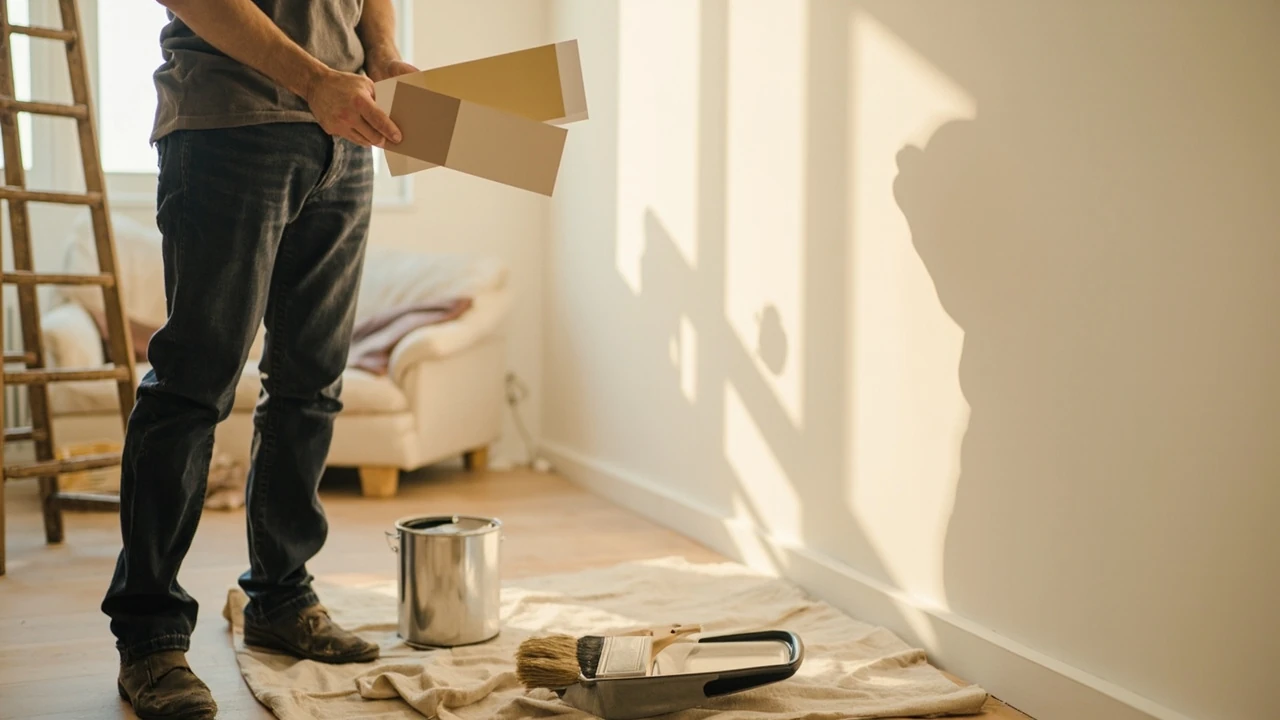
Cat rumah: choosing the right house paint for a lasting finish
A fresh coat of paint is one of the fastest ways to change how a home looks and feels, yet the term “cat rumah” covers a surprisingly wide range of products. Two houses painted on the same day with the same colour can age very differently if the paint chemistry, surface preparation, and finish choice were not matched to the wall, the room, and the local climate. The goal of this guide is to help a homeowner or a contractor’s client make confident decisions about house paint by understanding what is actually inside the can, how the surface should be prepared, and where the most common mistakes cost time and money.
Instead of treating paint as a single product, it helps to treat it as a system: substrate, primer, paint, finish, and the environment it lives in. With that framing, choosing the right product becomes a matter of matching a few technical facts to a real situation, rather than relying on brand reputation or the colour card at the counter.
What “cat rumah” actually includes
In everyday conversation, “cat rumah” usually means any paint that goes on a house, whether interior or exterior, wall or trim. In practice, manufacturers split house paint into well-defined families that behave very differently once they dry.
- Interior wall paint is formulated for stable indoor conditions. It is designed to resist scuffing, hold colour under artificial light, and clean up with low odour. It usually contains fewer UV blockers and mildewcides than exterior products because it does not need them.
- Exterior wall paint is built to handle sun, rain, and temperature swings. It carries more flexible binders, stronger colour retention, and mildewcides to fight biological growth on the surface.
- Primer or sealer is a separate layer that bonds to the substrate and gives the topcoat a uniform base. It is not optional on bare plaster, new gypsum, repaired patches, or stained surfaces.
- Trim, door, and enamel paint is a harder, more washable coating for wood and metal that takes more wear than a wall.
- Specialty paints include masonry paint, elastomeric coatings for hairline cracks, anti-mould bathroom paint, and textured coatings that hide surface imperfections.
Looking at paint this way makes the next question much easier: which family is the right one for the wall in front of you, and what is the role of the layer underneath it?
How interior and exterior cat rumah differ in chemistry
The two main resin families that define performance are acrylic and alkyd. Each behaves differently, which is why the same colour from the same brand can look identical in the can and behave very differently on a wall.
| Property | Acrylic (water-based) interior and exterior | Alkyd (solvent-based) enamels and trim paints |
|---|---|---|
| Typical use | Most interior walls, most exterior masonry and wood | Trim, doors, cabinets, high-traffic woodwork |
| Flexibility after curing | High; tolerates small substrate movement | Lower; can become brittle with age |
| Odour and cleanup | Low odour, water cleanup | Stronger odour, mineral spirits cleanup |
| Yellowing in dark areas | Resists yellowing | Can yellow over time, especially without UV exposure |
| Leveling and surface hardness | Improved with modern formulations, still slightly softer | Very smooth, hard, furniture-like finish |
| Drying between coats | Usually 2 to 4 hours | Often 6 to 24 hours |
Most contemporary house paint is acrylic, because it balances easy cleanup with strong adhesion. Alkyd still has a place on trim and on doors that need a hard, glossy surface, but many newer acrylic enamels close the gap for typical residential work.
Finish matters as much as colour
The sheen of a paint is not just a visual preference. It changes how a surface reflects light, how easy it is to wash, and how visible every wall imperfection becomes once the sun hits it.
| Finish | Look on the wall | Best rooms and uses | Cleaning and durability |
|---|---|---|---|
| Flat or matt | Soft, no shine, hides small flaws | Bedrooms, living rooms, ceilings | Lower washability; marks can soak in |
| Eggshell | Subtle sheen, warm, forgiving | Most living spaces, hallways | Better than flat, still soft on the eye |
| Satin | Gentler pearl than semi-gloss | Kitchens, bathrooms, kids’ rooms | Good cleanability, a safe all-rounder |
| Semi-gloss | Noticeable shine, highlights detail | Trim, doors, cabinets, utility rooms | Excellent cleanability, shows every dent |
| Gloss | Mirror-like, very hard surface | Front doors, accent trim, some kitchens | Most washable, demands perfect prep |
A common mistake is to use a higher sheen than the room needs, which then highlights every patch, roller mark, and uneven trowel line on the wall. For most interior walls, eggshell and satin offer the best balance between appearance and cleanability.
Surface preparation: the part that decides how long the paint lasts
Even the most expensive cat rumah will fail early if the surface underneath is dusty, chalky, glossy, or still curing. A useful rule is that surface preparation usually takes more time than the actual painting, and that ratio is healthy rather than excessive.
- Inspect the substrate. Look for hairline cracks, nail pops, flaking paint, mildew, and powdery residue. Run a hand over the wall; if it comes away chalky, the surface needs stabilising before any topcoat.
- Clean the surface. Dust, grease, and soap film reduce adhesion. A mild detergent solution is usually enough for interior walls. Exterior walls may need a pressure wash and a mould treatment if there is biological growth.
- Repair and sand. Fill holes, level cracks, sand glossy patches to a dull finish, and feather the edges of any repair so the patch does not telegraph through the new paint.
- Prime where needed. Use a stain-blocking primer over water marks, a bonding primer over glossy alkyd, a masonry primer on new plaster, and a separate primer on patched drywall.
- Mask and protect. Tape trim, cover floors, and remove switch plates. The time spent masking is paid back in the quality of the final edge.
Skipping or rushing any of these steps is the most common reason a paint job looks tired after one or two seasons instead of lasting a decade.
Estimating how much cat rumah you need
Paint quantity is often over-ordered. A reasonable rule of thumb on smooth plaster is that one litre covers about 10 square metres per coat, but coverage varies with surface roughness, porosity, and application method. Roughcast, new gypsum, and untreated concrete consume significantly more.
- Measure each wall as height times width, then subtract doors and windows.
- Multiply the result by the number of coats, normally two for a colour change and one to two for a refresh over a similar tone.
- Add 10 to 15 percent extra for touch-ups, the inevitable rework of cut-in edges, and the reality that rollers leave a small amount of paint in the tray.
For a typical 3 by 4 metre bedroom with a 2.7 metre ceiling, two coats of paint across the four walls usually sits in the 8 to 12 litre range, depending on whether primer is included as a separate step.
Interior or exterior: the climate question
House paint that is rated only for interior use will break down quickly outdoors because it lacks the additives and binders that handle UV radiation, wet-dry cycles, and temperature swings. The reverse is also true: an exterior paint used indoors is usually over-formulated for the room, costs more, and may off-gas more than necessary.
Where indoor rooms have unusual conditions, a specialist interior product is a better fit than a generic exterior one. Bathrooms, laundry rooms, and basement spaces benefit from interior paint with mould resistance, while kitchens benefit from a hard, scrubbable finish that resists grease splashes.
Tools, application, and the difference between roller, brush, and spray
The same can of cat rumah can look very different depending on how it is applied. The application method is part of the system, not an afterthought.
| Tool | Best for | Notes |
|---|---|---|
| Quality brush | Cutting in edges, corners, trim, detail work | A good brush leaves fewer bristles and a cleaner line than a cheap one |
| Short-nap roller | Smooth interior walls and ceilings | Gives a fine, even finish with minimal texture |
| Medium-nap roller | Lightly textured plaster, drywall with a slight orange peel | Carries more paint into the surface profile |
| Long-nap roller | Heavy texture, masonry, stucco | Reaches into peaks and valleys but can leave a heavy stipple |
| Airless sprayer | Large interior rooms, exterior walls, new construction | Fast, very even, but requires masking, back-rolling, and practice |
For most homeowners, a short-nap roller for walls plus a quality angled brush for edges is enough. Spraying makes sense for large, unobstructed areas and for new builds where the masking effort is concentrated in one stage rather than spread across a whole house.
Common mistakes that shorten the life of a paint job
Most premature paint failures come from a small set of predictable issues. Naming them makes them easier to avoid.
- Painting over an unprepared surface. Dust, chalk, and grease all act as release agents, so the topcoat peels even though it adhered to the dust rather than the wall.
- Skipping primer on patches. Patches of joint compound absorb paint at a different rate than the surrounding wall, leaving visible “flashes” that are hard to hide, especially in glancing light.
- Thinning the paint too much. Adding water to make the paint spread further reduces film build, coverage, and durability.
- Recoating before the first coat is dry. Trapped moisture can cause peeling, cloudiness, and poor adhesion between layers.
- Choosing the wrong sheen. High gloss on a wavy wall makes every imperfection obvious and turns touch-ups into full wall repaints.
- Ignoring ventilation in kitchens and bathrooms. Even mould-resistant paint will fail if the room has no air movement and surfaces stay wet.
These are not exotic problems. They are the everyday reasons why a paint job sometimes looks good in week one and patchy by the next season.
Health, safety, and the working environment
Modern water-based house paint is far less hazardous than older formulations, but it is still a chemical product and the working environment deserves attention. Use adequate ventilation, especially during the first 24 to 48 hours of curing. Keep occupants, pets, and food away from the work area. For ceilings and large wall runs, use a stable ladder rather than balancing on furniture, and wear eye protection when working overhead. Dispose of rags and used rollers responsibly, because some oil-based products and stains can generate heat as they dry.
Working with a contractor versus doing it yourself
For a single accent wall or a small bedroom, a confident homeowner with basic tools can produce a good result. For whole-house interior repaints, exterior elevations, or surfaces with repair work, a professional crew usually finishes faster, masks better, and has the equipment to spray or back-roll when needed. The honest test is not skill alone but time. Painting is one of the most labour-sensitive trades in residential construction, and the time it takes to do the job well is the part that surprises first-time renovators.
If the broader project also involves other upgrades, it can make sense to coordinate the painting with related work such as fence installation or a water softener install, because the same crew can move from indoor to outdoor tasks without losing days to scheduling gaps.
How colour choice interacts with light and finish
The same swatch can read as warm or cool depending on the light in the room. North-facing rooms lean cool and bring out blue undertones, while south-facing rooms lean warm and intensify reds and yellows. Artificial lighting matters too: warm LED light softens a colour, while cool daylight LEDs push it towards grey.
- Test a colour with a sample pot on at least two walls in the room before committing.
- Look at the sample at morning, midday, and evening light to see how the colour shifts.
- Hold the sample next to fixed elements such as flooring, cabinets, and countertops, not just next to other colours.
This is one of the few areas where the homeowner, not the contractor, should make the final call. The chemistry can be specified by a professional, but only the people living with the colour can decide whether it is right for the room.
When exterior paint needs a different approach
Exterior walls take more punishment than interior ones, and the failures look different. Instead of scuffing, exterior paint tends to chalk, fade, peel, or develop mildew. The decision to repaint is usually driven by visible chalking on the fingers, colour fading on sun-facing elevations, hairline cracks in the coating, or patches where the old paint has lost adhesion.
Exterior repaints benefit from a wash, a scrape, a sand where the paint is loose, a spot prime on bare wood or patches, and then one or two full coats of exterior acrylic. Masonry walls often need a breathable coating so trapped moisture can escape, otherwise the paint blisters and detaches from the substrate. For broader planning around exterior upgrades, articles like an overview of the best HVAC system for a home can sit alongside paint planning in a wider renovation schedule.
The life cycle of a paint job
A good interior paint job in a normal household should look fresh for 7 to 10 years in low-traffic rooms and 4 to 6 years in kitchens, bathrooms, and children’s rooms. Exterior paint in temperate climates typically lasts 7 to 10 years on wood and 10 to 15 years on well-prepared masonry, with south and west elevations usually needing attention first because of UV exposure.
When the next repaint comes, the work is easier if previous painters kept a record of the product, the colour code, the primer used, and the date. A small label on the back of a switch plate or a note in the maintenance folder saves a surprising amount of guesswork.
A practical checklist before opening the can
Before starting a cat rumah project, run through this short list. It is intentionally brief, because most of the value in a paint job comes from doing the few important things consistently well.
- Substrate is clean, dry, and sound.
- Repairs are filled, sanded, and dust-free.
- Primer is selected for the substrate and the stains involved.
- Paint is the right family for the room and the surface.
- Finish suits the room’s traffic and lighting.
- Coverage is calculated, with 10 to 15 percent extra on hand.
- Tools are clean, and the right nap and brush are ready.
- Ventilation, masking, and protection of floors and furniture are in place.
Most of the projects that go smoothly look like this list on paper before they look like a paint job on the wall.
Frequently asked questions
How do I choose between interior and exterior cat rumah for a room?
Use interior paint inside. Exterior paint is formulated for UV and weather, which is unnecessary indoors and can bring stronger odour and higher cost. Bathrooms and kitchens can use interior paint that is specifically mould-resistant or scrubbable.
Do I always need a primer before painting?
Not always, but it is the safe default. Use a primer on bare plaster, on patches, on stains, on previously glossy surfaces, and on colour changes that jump more than a few shades. A bonding primer is useful over old alkyd enamel.
How many coats of cat rumah are usually needed?
Two coats are the norm for most walls over a primer, because the second coat evens out absorption and brings the colour to its true depth. A single coat can be enough for a refresh over a very similar colour on a previously painted wall.
What is the best sheen for living room walls?
Eggshell is the most popular choice because it hides small wall imperfections while still being washable. Satin works well if the room sees more wear. Flat looks soft but is harder to clean.
Can I paint over mould without treating it?
No. Paint over active mould will fail, and the mould will return. Clean the area with an appropriate mould remover, address the moisture source, allow the surface to dry, then prime with a stain-blocking primer before repainting.
How long should I wait before putting furniture back against a freshly painted wall?
Most acrylic wall paints are touch-dry within 1 to 2 hours, but they take a few days to reach full hardness. Waiting at least 24 hours before contact and a few days before pushing furniture tight against the wall is a reasonable precaution.
What causes exterior paint to peel on a wood-sided house?
Common causes are moisture getting behind the paint through failed caulking or roof details, poor surface preparation before the previous paint job, and the natural movement of wood with seasonal humidity. Scraping back to sound material, fixing the moisture path, priming bare wood, and using a flexible exterior acrylic topcoat will usually resolve it.
Is spray application worth it for a single room?
For one room, the masking effort and equipment cleanup often outweigh the benefit. A short-nap roller and a good brush will deliver a comparable finish with less setup. Spray becomes worthwhile for multiple rooms, open-plan spaces, or exterior elevations.
How do I estimate the cost of a cat rumah project fairly?
Break the estimate into paint, primer, sundries, and labour. Paint and primer are usually a small share of the total in a labour-heavy project, while surface preparation, masking, and two full coats of application are the larger part. Getting a written scope that lists each step is the easiest way to compare quotes.
What is the simplest way to maintain a paint job once it is done?
Wipe walls gently with a soft cloth and a mild, non-abrasive cleaner. Address small marks and chips early with a kept aside pot of the original paint. Inspect exterior paint once a year for cracks, mildew, and failing caulk, and touch up before small problems become large ones.
Leave a Reply