
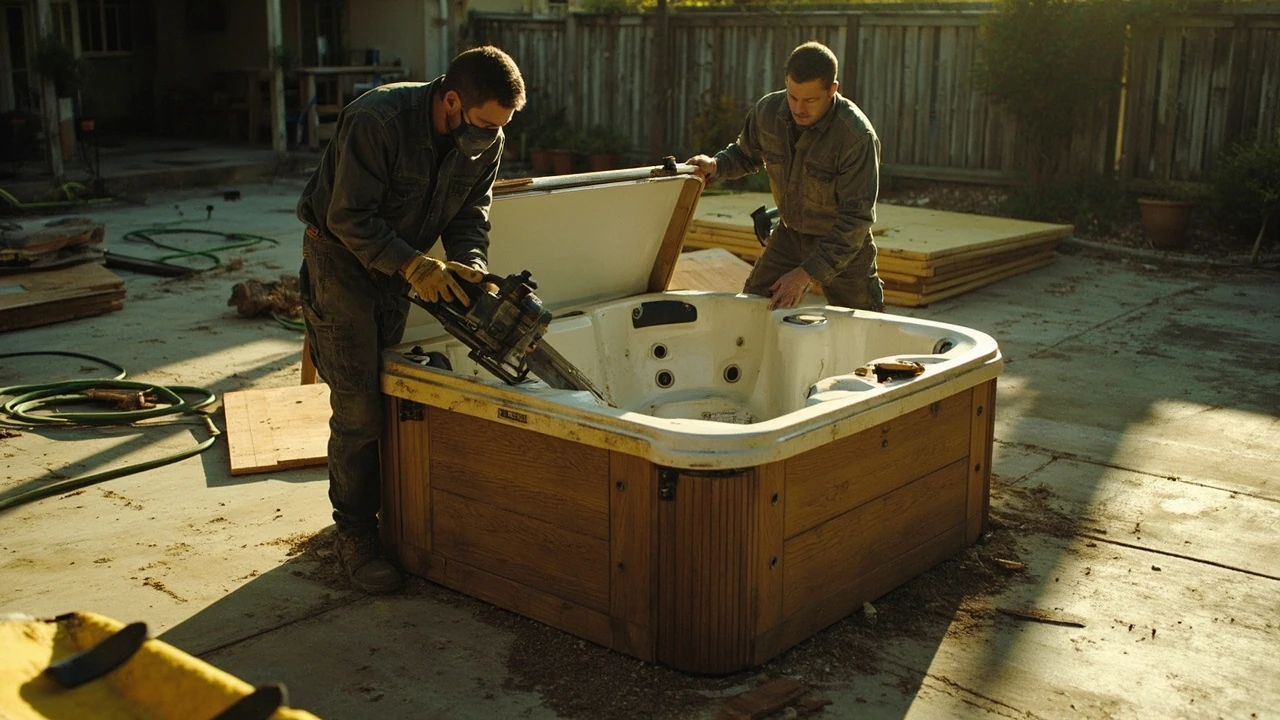
Jacuzzi removal: what homeowners actually face
An old outdoor jacuzzi is one of the heaviest residential items a homeowner is likely to own. Even a small two-person unit, fully plumbed, can weigh several hundred pounds before the equipment is detached, and a larger acrylic spa with a timber frame can exceed a ton once water, mortar base, and surrounding decking are included. That weight, combined with awkward dimensions and sharp fiberglass edges, is the reason jacuzzi removal is treated differently from ordinary junk hauling. The job involves plumbing, electrical disconnections, structural separation, controlled dismantling, and a disposal plan for materials that most curbside waste services will not accept.
This guide walks through the practical decisions a homeowner faces when an old spa has reached the end of its useful life. It covers when a do-it-yourself approach is realistic, when a professional crew is the safer choice, what the work actually involves on the day, and how to keep costs under control without cutting corners on safety or disposal. The aim is to give you a realistic picture of the project before you start scheduling contractors or renting tools.
Why jacuzzi removal becomes necessary
Hot tubs rarely fail in a single dramatic moment. Most owners begin thinking about removal after a slow accumulation of problems that makes the unit more trouble than it is worth.
- The shell has cracked, the acrylic is crazing, or the foam insulation has soaked up water and lost its thermal value.
- The pump, heater, or control board has failed, and the cost of parts plus labor approaches or exceeds the value of the replacement unit.
- The cabinet is rotting, especially in units with particleboard side panels that absorb ground moisture.
- Electrical components show signs of corrosion, tripping breakers, or failing ground-fault protection.
- The unit is no longer used because it is unsafe, uncomfortable, or simply out of style, and it has become a mosquito breeding area in the off-season.
At that point the spa stops being an amenity and starts being a fixture you want gone. Because the unit is heavy, awkward, and partly tied into your home’s plumbing and electrical systems, removal is rarely as simple as dragging it to the curb.
What a jacuzzi actually consists of
Understanding the build of a typical outdoor spa helps explain why jacuzzi removal involves several distinct stages rather than a single lift-and-haul task.
| Component | Typical material | Removal consideration |
|---|---|---|
| Shell | Acrylic over fiberglass | Brittle when cut, sharp edges, bulky |
| Insulation | Closed-cell spray foam or rigid board | Often wet and heavy, may need separate disposal |
| Cabinet / skirting | Timber, composite, or plastic panels | Screwed or clipped in place, removed first |
| Base | ABS pan, mortar bed, or gravel pad | May be permanent; sometimes left in place |
| Pump and motor | Steel and copper with electrical windings | Heavy, must be drained, e-waste component |
| Heater | Stainless or titanium element | Contains metal parts suitable for scrap recycling |
| Plumbing | PVC flex hose, rigid PVC, unions | Residual water, can be cut and capped |
| Electrical | Dedicated 220-240 V circuit in most regions | Must be de-energized and, ideally, disconnected by a qualified person |
| Cover and lift | Vinyl-wrapped foam, aluminum or ABS rails | Bulky, often left for last |
The electrical supply alone is often the part that stops a purely DIY approach. Many spas are hard-wired to a sub-panel on a dedicated breaker. If the unit is more than a plug-in 110 V model, working around that circuit without turning the wrong thing off is a real risk, which is why safety guidance for the wider category of hot tubs and spas stresses both electrical and water hazards at the same time.
Planning a jacuzzi removal: the decisions to make first
Before the first panel comes off, a few decisions shape the rest of the project.
- Will the unit leave the site whole, or be cut up first? Access from the spa to the truck or driveway usually decides this. A gate of at least 90 cm (about 36 in) and a path without tight turns generally allows a whole-unit roll. A narrow side yard or a deck surround usually forces on-site dismantling.
- Who handles the electrical and plumbing disconnections? In many jurisdictions, anything beyond a simple plug-in disconnection is supposed to be done by a licensed tradesperson. Check your local rules and, when in doubt, have a licensed electrician isolate the circuit at the panel before any cutting begins.
- What goes onto the truck and what stays? Mortar bases, concrete pads, and gravel beds are often broken up only if they are failing or if the new owner wants the space returned to lawn or patio. Otherwise they can stay in place, which saves significant labor.
- Where does the material go? A working spa has steel, copper, PVC, foam, acrylic, wood, and electronics. Most of that can be recycled, but it needs to be sorted, and not every waste hauler accepts all of it. Material recovery for hot tubs is a normal part of the workflow for crews that specialize in this work, as described in this overview of how a hot tub removal service handles dismantling and recycling.
Sorting those four questions out in advance avoids the common situation of a half-dismantled spa sitting in the yard for days because the next step was never decided.
DIY jacuzzi removal: when it is realistic
Doing the work yourself is a real option in some situations. The key conditions are that the unit is small, the access is good, the plumbing and electrical disconnections are simple, and you have at least one or two helpers.
| Factor | DIY-friendly situation | Reason to stop and call a pro |
|---|---|---|
| Size | Two- to four-person inflatable or hard-shell spa under about 250 kg empty | Large acrylic spa over 300 kg empty, or with a concrete base |
| Access | Wide gate, level path to a driveway or curb | Narrow side yard, stairs, tight corners, deck with limited clearance |
| Electrical | Plug-in 110/120 V unit on a standard outlet | Hard-wired 220/240 V circuit, sub-panel, or GFCI wiring that needs proper isolation |
| Plumbing | Simple garden-hose fill and drain | Plumbed into a dedicated drain line, with a heater loop that needs flushing |
| Base | Portable base, plastic pan, or gravel pad | Set in mortar, on a permanent concrete slab, or built into a deck frame |
| Disposal | Truck or trailer rental available, recycling drop-off identified | No realistic way to move the dismantled material in one trip |
If the project fits the left column, DIY jacuzzi removal is a reasonable weekend project for two fit adults with a reciprocating saw, a drill, basic hand tools, and a rented trailer. If the project fits the right column on more than one row, the safer choice is a professional crew, even though it costs more up front. A failed attempt at moving a 400 kg acrylic shell down a narrow side yard is the kind of mistake that ends in property damage or a hospital visit.
Professional jacuzzi removal: what the crew actually does
A specialized removal crew runs through a fairly consistent sequence, although the details shift with each site.
- Pre-job check. Confirm the unit is fully drained, identify the electrical supply, and plan the path from the spa to the truck. Photograph the access route to be sure of the dimensions.
- Electrical isolation. Locate the breaker or disconnect for the spa and confirm it is off. If the unit is hard-wired, the crew either disconnects at the junction box or, where required by local code, has a licensed electrician on site.
- Plumbing disconnections. Cap or disconnect fill, drain, and circulation lines. Some units have a dedicated heater loop that needs a short flush before it is cut free.
- Skirting and equipment removal. Take off the side panels, lift out pumps, motors, and the control pack, and set them aside for recycling as metal and e-waste.
- Shell dismantling. Cut the acrylic shell into manageable sections with a reciprocating saw fitted with a fine-tooth or bi-metal blade. For very large units the shell is cut in place and the pieces carried out.
- Insulation and base. Remove loose spray foam or rigid insulation. The base, if permanent, is left in place unless the client has asked for full site restoration.
- Loading and cleanup. Carry or roll the pieces to the truck, sweep the site, and confirm that the area is safe and tidy before leaving.
A small two-person crew can complete a typical outdoor acrylic spa in two to four hours. A built-in unit on a deck with restricted access can take most of a day and a second crew.
Cost ranges and what drives them
For additional context, Published rates vary by region, but a few patterns are consistent across the United States. The numbers below describe typical ranges reported for jacuzzi removal by independent hauling services and franchise operators. They are not quotes.
| Job type | Typical price range (USD) | What is included |
|---|---|---|
| Portable inflatable spa, single trip | 100 to 250 | Drain, deflate, fold, haul |
| Standard outdoor acrylic spa, above ground, clear access | 300 to 600 | Drain, dismantle, haul, basic cleanup |
| Built-in or deck-surrounded spa, restricted access | 500 to 1,200 | On-site cutting, longer labor hours, debris sorting |
| Spa with concrete or mortar base, full removal | 800 to 2,000+ | Demolition of base, slab work, possibly a second crew |
| Add-on: electrical disconnection by licensed electrician | 100 to 300 | Sub-panel work, wire capping, sometimes permit fees |
Three variables explain most of the spread:
- Access. A spa that can be rolled straight to a truck is a different job from one that has to be cut up on a deck and carried out in pieces.
- Size and weight. Larger shells mean more cutting, more trips to the truck, and sometimes a second laborer.
- Base and site conditions. Concrete, mortar, and built-in surrounds add demolition time and disposal volume, which shows up in the final bill.
Some haulers price by the truckload and a posted minimum, others price by the hour. Either way, the smartest move is to describe the access, the unit size, and the base in writing when you request a quote, so the price reflects the real job and not the average one.
Safety considerations during jacuzzi removal
Old spas are heavy, sharp, and often full of stagnant water even after a “drain.” Cutting into the shell without planning the cuts is the most common DIY mistake.
- Electrical. Confirm the breaker is off and locked out before any cutting. Even a de-energized spa can hold residual charge in capacitors inside the control pack.
- Water. Drain the unit fully, run the pump briefly with the drain open, and remove any water remaining in the heater loop and the jets. A reciprocating saw does not behave well when it hits pooled water.
- Sharp edges.
- Weight. Never roll a partially dismantled shell on your own. Most injuries during jacuzzi removal are back and shoulder strains from lifting awkward loads, not from the cutting itself.
- Chemicals. Older spas may have residual sanitizers in the plumbing. A short flush of fresh water through the lines before dismantling reduces skin and inhalation exposure.
Acrylic and fiberglass crack into long, sharp splinters. Heavy gloves, long sleeves, eye protection, and a dust mask are basic requirements.
For a wider discussion of the electrical and water hazards around hot tubs, the Wikipedia article on hot tubs covers the relevant safety considerations and the way units are wired in different markets.
Disposal and recycling of jacuzzi materials
Once the spa is broken down, the materials fall into a few streams that are handled differently.
| Material | Typical destination | Notes |
|---|---|---|
| Acrylic and fiberglass shell | Construction and demolition waste, some specialty recyclers | Hard to recycle curbside; most goes to C&D landfill |
| Steel frame and cabinet hardware | Scrap metal recycler | Sorted ferrous scrap, often paid by weight |
| Pump, motor, and electronics | E-waste or appliance recycling | Motors contain copper windings; control boards have circuit components |
| Spray foam or rigid insulation | C&D waste | Usually not accepted in curbside bins |
| Wooden cabinet panels | Wood recycling, biomass, or landfill | Treated wood may need a separate route |
| Plumbing PVC | Plastic recycling where accepted | Often mixed C&D if contaminated |
A homeowner doing the job themselves can usually take metal, motors, and electronics to a local scrap yard and e-waste drop-off, and put everything else into a rented C&D dumpster. A professional crew will normally include material sorting in the quoted price, which is one of the reasons their services cost more than a simple junk pickup.
Permits, codes, and neighbor considerations
Most jurisdictions do not require a building permit for jacuzzi removal in the same way that installation does, but a few rules still apply.
- If the unit is hard-wired, the electrical disconnection may have to be inspected, especially if a sub-panel or dedicated circuit is being capped or removed.
- Cutting into a concrete or mortar base can trigger debris-handling rules, including the use of a permitted dumpster in some areas.
- If a dumpster is placed in a driveway or on the street, many municipalities require a temporary right-of-way permit, with a small fee and a set of placement rules.
- Shared-wall or HOA properties often have quiet-hours rules for power tools, which matters on a Saturday morning job.
It is worth a quick call to your local building department if the job involves a sub-panel or a permanent base. For a portable spa with a plug-in connection, no permit is usually required at all.
Preparing the site on the day of removal
Whichever path you choose, a small amount of preparation the day before saves a surprising amount of time on the day.
- Drain the spa fully, including the heater loop, and remove the cover so the shell can air out.
- Clear the access path. Move planters, patio furniture, and toys out of the way to the driveway or yard.
- Confirm the breaker is off and that the disconnect, if present, is reachable.
- Have a hose ready for a final rinse of the equipment area and the shell interior before cutting.
- Identify a staging zone for the dismantled pieces, ideally on a hard surface close to the truck.
For a DIY job, this is also the moment to double-check that the rented truck or trailer is rated for the weight of the shell pieces. Acrylic sections are lighter than the assembled unit, but a stack of foam-soaked insulation can still surprise you.
After the spa is gone: restoring the space
Once the unit is off the site, the remaining work depends on what was underneath.
- Lawn or garden restoration. A portable spa on a gravel pad usually leaves a clean, level area. Top-dress with soil, seed, and water in the right season.
- Patio extension. Many homeowners use the cleared footprint to extend an existing patio or deck, which involves pouring a new slab or framing a new section to match the surrounding surface.
- Deck repair. Built-in spas on a deck usually leave a gap that needs new framing and decking boards. Match the existing species, profile, and fastener pattern for a clean look.
- Electrical finishing. If the spa circuit has been removed, an electrician can cap the wiring at the panel or convert the run to a usable outdoor outlet.
A quick decision about the next use of the space is helpful before the day of removal, because it shapes whether the base is left in place or broken out.
Common mistakes to avoid
A few patterns come up again and again in jacuzzi removal projects, and most of them are easy to avoid with a little planning.
- Underestimating the empty weight. A drained spa still weighs hundreds of pounds. Rolling it on its base assumes the base can take the load, which a rotting timber frame often cannot.
- Cutting the shell before removing equipment. Pumps, motors, and the control pack have to come out before the shell is cut, or you cut into live wiring or pressurized plumbing.
- Skipping electrical isolation. Even a “drained” spa with a sub-panel can be dangerous if the breaker is left on. Lock-out, tag-out is not just for industrial sites.
- Putting foam and acrylic into curbside bins. Most municipal services will refuse the load, which leaves the debris on the driveway until a special pickup is arranged.
- Forgetting about the deck or patio underneath. A heavy shell on a soft patio can crack pavers as it is rolled. Laying plywood sheets along the path protects the surface and the shell.
A short mental walk-through of each of these points the day before the job eliminates most of the surprises.
Frequently asked questions
How much does jacuzzi removal usually cost?
Most outdoor acrylic spa removals in the United States fall between 300 and 600 USD when the unit is above ground and the access is clear. Built-in spas, deck-surrounded units, or spas on permanent bases typically run between 500 and 1,200 USD, and full demolition of a concrete or mortar base can push the total above 2,000 USD. Prices vary by region, and the best way to get a real number is to describe the access, size, and base in writing when requesting a quote.
Can I remove a jacuzzi by myself?
Small portable spas with a plug-in electrical connection and a clear path to a driveway can be removed by two fit adults in a single day with basic hand tools and a rented trailer. Larger hard-shell spas, units with 220-240 V hard-wired connections, or spas on permanent bases are usually better left to a professional crew because of weight, electrical, and disposal risks.
Do I need a permit to remove a jacuzzi?
Removing a portable plug-in spa does not usually require a building permit. If the unit is hard-wired and the electrical run is being modified or removed, local rules may require an inspection or a licensed electrician. A concrete or mortar base that is being broken out can trigger debris-handling rules, and a dumpster placed in a public right-of-way may need a short-term placement permit.
How long does jacuzzi removal take?
A typical above-ground acrylic spa takes a two-person professional crew about two to four hours from arrival to a clean site. A built-in or deck-surrounded unit with restricted access usually takes most of a day, and a unit on a permanent concrete base can run into a second day if the base is being demolished.
What happens to the old jacuzzi after it is taken away?
Working spas contain steel, copper, PVC, foam, acrylic, wood, and electronic components. Most of that material can be recycled. Steel and copper are sold as scrap, motors and control boards go to e-waste recycling, and acrylic and foam generally go to a construction and demolition waste stream. Some specialty recyclers accept acrylic shells, but curbside services usually do not.
Is jacuzzi removal dangerous?
The main hazards are electrical shock, cuts from acrylic and fiberglass, and back or shoulder injuries from lifting awkward loads. These are managed by isolating the electrical supply at the breaker before any cutting, draining the spa and its heater loop, wearing gloves, eye protection, and a dust mask, and avoiding solo lifts of any part of the shell. When those basics are followed, the job is no more dangerous than most medium-scale home renovation work.
Should I drain the spa myself before the crew arrives?
Yes. A fully drained spa, including a brief pump cycle with the drain open to clear the lines, saves the crew time and reduces the risk of pooled water during cutting. The crew will still bring a pump and a hose for any water that collects in the base of the shell, but a head start is appreciated.
Can I leave the base or pad in place?
In most cases, yes. A level gravel pad or a sound concrete slab can stay where it is and become a patio, a shed base, or simply a clean area of yard. A failing mortar base under a rotted cabinet is usually broken up because the surrounding material has degraded along with it. The decision is a practical one, based on what the new use of the space will be.
How do I choose between DIY and a professional crew?
Use access, size, electrical, plumbing, and disposal as the five filters. If more than one of those points to a professional crew, the total cost of mistakes tends to outweigh the savings from doing it yourself. If all five lean the other way and you have at least one helper, a DIY project is realistic and will save a meaningful amount of money.
What should I do with the space after the jacuzzi is removed?
Common follow-ups are extending an existing patio, restoring the area to lawn, framing a new deck section, or converting the electrical run to a usable outdoor outlet. A short conversation with a landscape or deck contractor before the day of removal helps align the cleanup with whatever is coming next, so the cleared space does not sit empty for longer than necessary.
If you would like a second opinion before booking a crew, a home services pricing reference for nearby work like water softener installation is a useful sanity check on what trades are charging in your area. For an unrelated but often-followed project around the same time, the checklist for getting a house ready to sell covers the kind of outdoor cleanup that pairs well with a backyard project.
Leave a Reply