
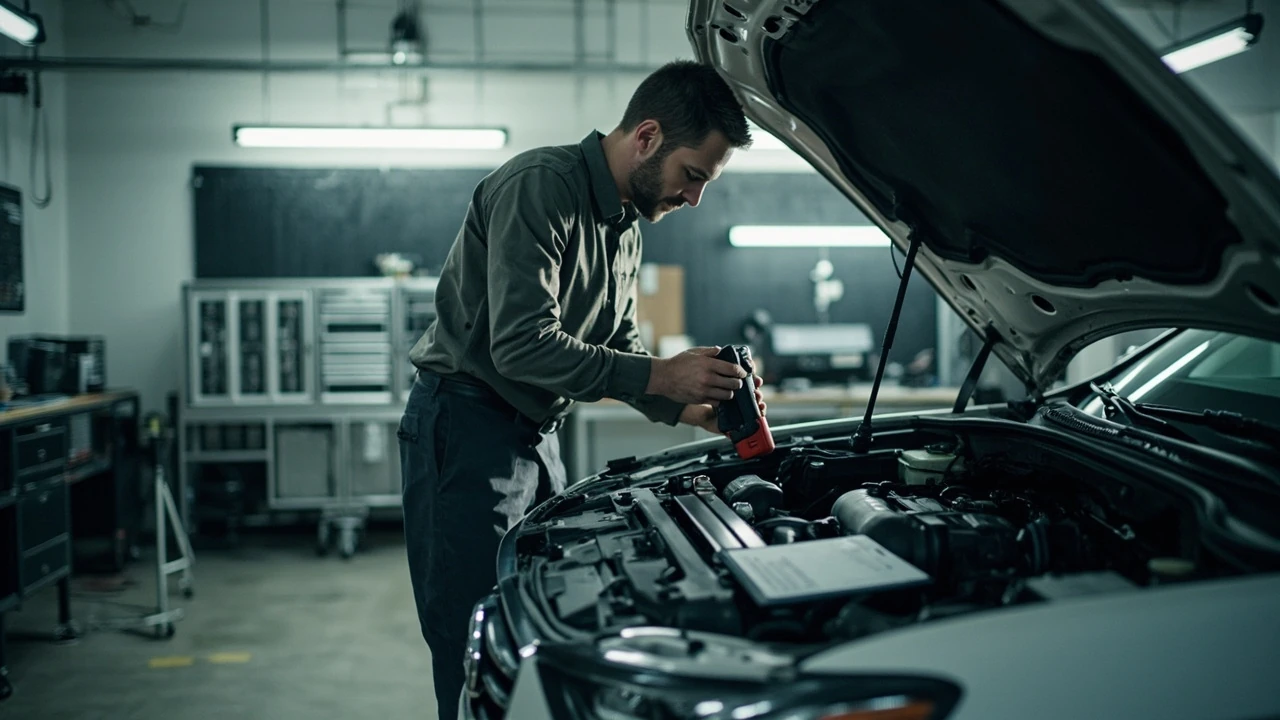
Car inspection: what it actually covers and how to prepare for one
A buyer in Rapid City paid $9,400 for a used SUV last spring, drove it home, and discovered two days later that the frame had been straightened after a hailstorm and the airbags had been replaced with recycled units. The seller had nothing to disclose, and the buyer’s mechanic later estimated the hidden repairs at $6,200. The car itself was clean, started fine, and looked normal in every photo. A scheduled car inspection before payment would have flagged the panel work, the paintless dent repair evidence on the roof, and the airbag module swap, and the price would have been renegotiated or the deal canceled.
That is the purpose of a real vehicle inspection: it turns a private transaction, a state renewal, or a fleet check into documented evidence about how the car actually performs, rather than how it looks from the curb. If you are renewing a registration in a state that requires it, buying from a private seller, or maintaining a small fleet, the mechanics of a proper inspection follow the same pattern: a defined scope, a written report, and a decision based on what the report shows.
This guide walks through what an inspection typically covers, who performs it, how long it takes, what it costs, and what you can do at home to prepare. It also explains how pre-purchase inspections differ from annual state or safety inspections, and which items usually cause a vehicle to fail.
Three main types of car inspection and how they differ
Most drivers encounter the term “car inspection” in three distinct contexts, and they share very little beyond the word. The scope, the inspector, and the legal weight of the result all change depending on which one you are dealing with.
State or annual safety inspection
Some U.S. states and many jurisdictions worldwide require a periodic safety and emissions check before a vehicle can be registered or renewed. The scope is usually narrow: brakes, tires, lights, horn, wipers, exhaust, steering, glazing, and, in emissions regions, the exhaust gas composition and on-board diagnostics. Inspections of this type are short, often 20 to 40 minutes, and they produce a pass or fail result that is uploaded to a state database. They are not a comprehensive mechanical health check, and they are not designed to be one.
Pre-purchase car inspection
A pre-purchase inspection is a deep dive that a buyer commissions before completing a private-party or dealer purchase. Its scope is wide because the buyer is about to assume the risk of any defect. Inspections of this type typically cover 150 to 250 checklist items and produce a written report, often with photos. The vehicle is usually lifted so the undercarriage can be examined, the fluids are checked, a short road test is performed, and the body is scanned for evidence of prior collision or hail repair. The output is closer to a buyer’s risk assessment than a regulatory certificate.
Maintenance or seasonal inspection
Many shops, dealership service departments, and fleet operators offer a maintenance inspection that is bundled with an oil change or scheduled service. The scope sits between the two: deeper than a state check, lighter than a pre-purchase, focused on the systems most likely to cause a breakdown. These inspections are useful for road-trip preparation, winterizing a vehicle, or verifying a used car after a warranty has expired.
| Type | Typical scope | Typical duration | Output | Who performs it |
|---|---|---|---|---|
| State or annual safety | Brakes, lights, tires, glazing, emissions | 20 to 40 minutes | Pass or fail certificate | Authorized state station or technician |
| Pre-purchase | 150 to 250 mechanical and body items, road test | 2 to 4 hours on site | Written report with photos and buy-or-walk recommendation | Independent mobile or shop-based inspector |
| Maintenance or seasonal | Wear items, fluids, belts, battery, tires, wipers | 45 to 90 minutes | Service sheet with work recommendations | Shop or dealer service department |
What a comprehensive car inspection actually covers
A thorough inspection moves through the vehicle in a logical order, usually starting at the ground and working upward, then from the engine bay to the interior, and finally on the road. The order matters because the evidence is cumulative: a tire wear pattern only makes sense once the alignment and suspension have been looked at, and a charging-system reading only means something once the belt and battery have been checked.
Underbody and suspension
The technician examines the exhaust system for rust, the subframe for collision damage, the control arms and bushings for play, the shocks and struts for leaks, and the brake lines for corrosion. A flashlight and a lift make this part possible; without them, most underbody evidence is invisible. A pre-purchase inspector also looks for evidence of undercoating applied over rust, which is a common way sellers hide frame damage.
Engine bay and fluids
With the hood open, the inspector checks fluid levels and condition: engine oil color and consistency, coolant level and freeze point, brake fluid clarity, transmission fluid smell and color, power steering fluid, and washer fluid. The drive belts are examined for cracking, the hoses for soft spots, the battery for terminal corrosion and resting voltage, and the air filter for restriction. Codes from the on-board diagnostic system are pulled and recorded even if the check-engine light is off, because pending codes often point to developing problems.
Brakes, tires, and wheels
Brake pad thickness is measured at each corner, rotors are checked for thickness, lip, and hot-spotting, and the calipers are inspected for sticking pistons. Tires are measured for tread depth, checked for even wear across the axle, and inspected for sidewall damage, dry rot, and matching speed and load ratings. Wheel bearings are checked for noise, and the alignment indicators on the tires are read for signs of recent or long-standing misalignment.
Body, glass, and paint
The body is scanned for panel gap inconsistency, which is a strong indicator of prior accident repair. Paint depth gauges are used to detect overspray or re-painted panels. The windshield and other glazing are checked for chips, cracks, and proper labeling, and the wipers are tested for streaking. A pre-purchase inspector in hail-prone areas looks specifically for roof and hood dimpling patterns consistent with paintless dent repair.
Interior and electronics
Inside the cabin, the inspector tests every switch and feature, including windows, locks, mirrors, seats, seat heaters, climate control, infotainment, navigation, and driver-assistance systems. Airbags, seat belts, and the supplemental restraint system are checked for stored fault codes, because a deployed airbag that has been replaced with a recycled unit often leaves evidence in the airbag control module. Warning lights are recorded, and a short test drive confirms that all systems perform under real conditions.
| Area inspected | What the technician looks for | Common failure causes |
|---|---|---|
| Underbody | Rust, frame damage, leaks, worn bushings | Surface rust, oil seepage, minor play |
| Engine bay | Fluid condition, belt and hose wear, battery health, stored codes | Low coolant, worn serpentine belt, pending OBD codes |
| Brakes | Pad thickness, rotor condition, caliper function, brake fluid moisture | Pads under 3 mm, grooved rotors, soft brake hose |
| Tires and wheels | Tread depth, even wear, sidewall condition, age | Tread under 4/32 in, mismatched tires, sidewall bulges |
| Body and glass | Panel gaps, paint depth, prior repair, glass integrity | Repainted panels, overspray, windshield star breaks |
| Interior and electronics | Switch function, warning lights, climate, infotainment, airbags | Failed switches, stored airbag codes, dead pixels |
How long a car inspection takes and what it costs
Time and cost scale with scope. A state safety inspection is short because the checklist is short. A pre-purchase inspection takes hours because the checklist is long and the inspector needs the car to be lifted, idled, and driven.
Typical durations
- State or safety inspection: 20 to 40 minutes, often by appointment or walk-in at a licensed station.
- Maintenance inspection bundled with an oil change: 45 to 90 minutes, performed while the car is already in the bay.
- Pre-purchase inspection: 2 to 4 hours on site, sometimes longer for older vehicles or specialty cars.
- Specialty inspections (classic, electric, heavy-duty): 3 to 6 hours, often with a specific report format.
Typical price ranges
State inspection fees are usually set by regulation and range from about $10 to $50 depending on the state and the emissions component. Pre-purchase inspections are market-priced and commonly run from $150 to $400 for a standard passenger vehicle, with higher fees for exotic, heavy-duty, or remote-location inspections. Mobile pre-purchase services that travel to a seller’s address generally include a travel or convenience fee in the quoted price.
When comparing quotes, ask whether the report includes a road test, a written summary, photos, and a free vehicle history pull. A low headline number often excludes the items that make the inspection useful. The reason mobile pre-purchase services have grown in cities like Rapid City is that they combine the inspection with on-site scheduling, so the buyer does not have to coordinate getting the seller’s car to a shop, and the inspector documents the underbody and body in the same visit.
Who is qualified to inspect your car
The answer depends on which type of inspection you need. Each role has a different credential, and the wrong credential can leave you with a report that has no value for the purpose you had in mind.
State inspectors
State inspectors work at stations that have been licensed by the state’s motor vehicle or environmental agency. They complete a state-specific training course, and the station’s equipment is calibrated on a schedule set by the state. The credential is not transferable across state lines, and the inspector is not the same as a diagnostic technician. A state inspector’s role is to apply a fixed pass-or-fail test, not to recommend repairs.
Independent mobile inspectors
Pre-purchase inspectors are typically ASE-certified mechanics who have moved into a specialty service. They travel to the seller’s location, perform the inspection on site, and deliver a written report. Certification alone is not enough: the report’s usefulness depends on the inspector’s experience with the specific make and model, the age range being inspected, and the local risk factors such as hail, road salt, or flood history. When you book, ask how many inspections they have performed on your vehicle’s make and model, and ask for a sample report so you can judge its depth.
Dealership service departments
For newer vehicles still under manufacturer warranty, a dealership service department is the most credentialed option for a maintenance inspection, because the technicians have brand-specific training and access to manufacturer technical bulletins. The trade-off is that the same shop may also be a candidate to perform the repairs, so the inspection and the quote are not always independent. For a pre-purchase inspection of a used vehicle at a competing brand, an independent inspector is usually the better choice.
Fleet and commercial inspectors
Commercial vehicles under DOT jurisdiction are subject to a separate annual inspection standard, typically a 37-point checklist under the Federal Motor Carrier Safety Administration. The work is performed by inspectors with a specific DOT credential, and the documentation has to be retained by the carrier. A regular state inspection is not a substitute, and a pre-purchase inspector is not authorized to sign off on a DOT inspection.
What causes a car to fail an inspection
Even a well-maintained vehicle can fail a state inspection if a single item is out of spec. The reasons tend to cluster into predictable categories, and most are addressable on the same day.
Common safety failures
- Tread depth below the state minimum, usually 2/32 in, on any tire.
- A cracked windshield within the driver’s primary viewing area.
- Failed brake test, including pad thickness, rotor condition, or hydraulic imbalance.
- Non-functional lighting: a burned-out headlight, a cracked lens, an inoperative turn signal, or a missing reflector.
- A stuck or inoperative horn, mirrors, or seat belts.
- Exhaust leak at a joint, catalytic converter, or muffler, with sound above the state limit.
Common emissions failures
In emissions-testing states, the most frequent causes of failure are a stored or pending check-engine light, a failed OBD readiness monitor, an exhaust gas reading above the limit for hydrocarbons, carbon monoxide, or oxides of nitrogen, and a tampered or missing catalytic converter. A car that was recently disconnected from its battery can also fail because the readiness monitors will not have completed their cycles, and a tire-pressure-light-on, while not an emissions failure on its own, can prevent the test from starting on some systems.
Document and equipment failures
State inspectors may also fail a vehicle for missing or unreadable VIN plates, missing or altered emissions labels, an inoperative odometer, or a fuel-filler cap that does not seal. These are uncommon but they are a good reminder that the inspection includes identification of the vehicle as well as its condition.
How to prepare for a car inspection
Most inspection failures are preventable with a small amount of preparation the day before. The goal is not to mask a problem; it is to make sure that a marginal component is not the reason the inspection is not representative of the vehicle’s actual condition.
- Confirm the inspection type and the documents required. A state inspection usually needs the registration or renewal notice. A pre-purchase inspection needs the seller’s name, the address where the car is located, and a way to access the vehicle.
- Check tire pressure on all four tires and the spare, and verify that the tread depth is above the legal minimum with a simple gauge. A tire that is underinflated can fail a brake test on a dynamometer.
- Top off washer fluid, confirm the horn works, replace any burned-out bulbs, and make sure all mirrors and wipers operate. These are the cheapest fixes and the most common failures.
- If the check-engine light is on, read the stored code with a consumer OBD-II scanner before the appointment. Pending codes are useful diagnostic information for the inspector; a steady light will fail the inspection regardless.
- For a pre-purchase inspection, ask the seller not to drive the car for the 30 minutes before the inspector arrives, because a cold start is part of the diagnostic. Plan for the inspector to lift the vehicle, so make sure the seller’s driveway or parking spot can accommodate a portable ramp or a mobile lift.
- Clear the cabin of personal items so the inspector can test every seat, belt, and switch, and remove any child seats that block access to the rear belts.
- Bring any service records, prior inspection reports, and recall completion letters. They help the inspector distinguish a recent repair from a chronic issue and reduce the chance of a needless red flag.
What a good inspection report looks like
An inspection is only as useful as the document it produces. A one-line pass or fail is fine for a state certificate, but for a pre-purchase or fleet inspection, the report is the deliverable, and the format matters.
What to expect in a pre-purchase report
A pre-purchase report typically includes a vehicle identification section, the inspection date and location, the inspector’s credentials, a checklist organized by system, a summary section, and a final recommendation. Photos are increasingly standard, especially of the underbody, any fluid leaks, worn tires, and evidence of body repair. The summary should separate immediate safety concerns from near-term maintenance items, and the recommendation should be one of four options: buy as is, buy with the listed repairs and a renegotiated price, walk away, or inconclusive pending a specialist review.
What to expect in a state inspection certificate
A state certificate is the opposite: a short form with the station number, the technician’s credential number, the date, the result, and any items that caused a failure. If the vehicle fails, the station usually issues a rejection slip listing the failed items and the date by which the repair must be completed and the vehicle re-inspected. Some states allow partial passes, where a safety failure blocks registration but an emissions failure can be retried within a window.
Red flags in a report
- No underbody section. A pre-purchase report without underbody photos was not performed on a lift, and the most expensive defects are usually underneath.
- No diagnostic trouble codes listed. A car with no codes is normal; a car with the OBD system not scanned is an incomplete inspection.
- Vague findings such as “fluids okay” or “brakes fair” without measurements. Specifics like “front pads 5 mm, rear pads 3 mm” or “coolant freeze point minus 28 degrees” are what make a report useful.
- No buy-or-walk recommendation. A pre-purchase inspection that ends without a recommendation has not finished the job.
- No inspector name or credential on the document. An unsigned report is hard to verify if the deal later goes wrong.
Car inspection and vehicle history: why both matter
An inspection tells you how the car is right now. A vehicle history report tells you how the car was treated before. Used together, they catch different risks. A car with a clean history can have a failing transmission today. A car with a salvage title can be mechanically excellent if it was rebuilt properly. The two pieces of evidence should be read against each other, not in place of each other.
What a history report covers
A vehicle history report, drawn from state title records, insurance claims, auction listings, and service records, will list title brands such as salvage, rebuilt, flood, or hail, ownership changes, odometer readings, accident reports, and sometimes service milestones. It will not list the car’s current mechanical condition. A mobile pre-purchase service that includes a VIN-based history report alongside the inspection is doing the buyer a real favor, because the inspection findings can then be checked against the title and accident history to spot mismatches.
How to read the two together
If the history shows a hail claim and the inspection shows paintless dent repair on the roof and a replaced hood panel, the picture is consistent. If the history is clean and the inspection shows frame paint and overspray, the seller may be unaware of an event, or may be choosing not to disclose. In that case, the buy-or-walk recommendation should be conservative. The pre-purchase inspectors operating in Rapid City note the role of regional hail and disclosure practices in shaping inspection findings, and that logic applies anywhere a severe-weather pattern is part of the local used-car market.
Common myths about car inspection
Several persistent myths make inspections less useful than they should be. None of them are true across the board, and understanding the limits of the inspection helps the buyer ask better questions.
“A new car doesn’t need an inspection”
A new vehicle benefits from a pre-delivery inspection by the selling dealer, which is the buyer’s last chance to catch shipping damage, fit and finish issues, and missing accessories before accepting the car. After delivery, the maintenance schedule takes over, and the first inspection is usually at the first oil change. Skipping the pre-delivery walkaround means that any paint chip from transport becomes the buyer’s problem.
“If the check-engine light is off, the car is fine”
Pending codes can be set without illuminating the warning light, and a code that was recently cleared will not return until the relevant monitor completes its drive cycle. An inspector who pulls codes and checks readiness monitor status is doing the work that the dashboard cannot do for you.
“A clean Carfax means a clean car”
Carfax and similar services only see what is reported to them. Cars repaired without an insurance claim, cars that were never titled in a participating state, and cars with cosmetic-only hail repair that was never documented will not show up. A clean history is a starting point, not a conclusion.
“Any mechanic can do a pre-purchase inspection”
General competence is necessary but not sufficient. A good pre-purchase inspector has a checklist, a lift, a scanner, a camera, a report template, and the time to do the job. The mechanic who changes your oil is not automatically the right person to evaluate a $15,000 purchase. The pre-purchase inspection is a specialty, and the price reflects the time, not just the parts.
Car inspection for electric and hybrid vehicles
Electrified vehicles need a different checklist, and a generic mechanical inspection will miss the items that matter most. The high-voltage battery state of health, the charging system, the regenerative braking feel, and the thermal management system all need their own evaluation.
Battery state of health
A high-voltage battery loses capacity gradually, and a degraded pack will show up as reduced range long before it shows up as a failure. Specialty tools can read cell-level voltage variance and the battery management system’s recorded state of health, but only if the inspector has the right scanner for the make. Without that read, the inspector is guessing about the most expensive component on the vehicle.
Charging and thermal systems
The inspector should test Level 1 and Level 2 charging if the adapters are available, confirm that the charge port latch works, and check the cooling system for the battery and the inverter. A coolant leak that is invisible from the engine bay can still be a thermal management leak on an EV, and an overheated battery will derate performance dramatically.
Regenerative braking and one-pedal driving
On a road test, the inspector confirms that regenerative braking is engaged, that the friction brakes are taking over smoothly at low speeds, and that any one-pedal driving mode works as expected. A regenerative system that has been disabled through a fault code will shorten brake life and reduce range, and the symptom is not always obvious to a first-time driver.
How to handle an inspection failure
A failure is not the end of the transaction in a private sale and not the end of the registration cycle in a state inspection. The right response depends on which type of inspection produced the result and what specifically failed.
After a state failure
The rejection slip lists the failed items. You can choose to have the same station perform the repair, which usually gives you a free re-inspection, or you can take the list to another shop for an independent estimate. After the repair, the vehicle is re-inspected, the failed items are rechecked, and the certificate is issued if the car now passes. In most states you have a fixed window to complete the repair and re-inspect, after which the process starts over.
After a pre-purchase failure
The inspection report is the buyer’s leverage. The right next step is to share the summary section with the seller and ask for a price reduction, a partial repair, or a canceled sale. A serious seller will often split the cost of a known upcoming repair. A seller who refuses to engage with the report is telling you something about the deal. The report is also the basis for walking away, which is the most underused option in the used-car market.
After a maintenance inspection
For a maintenance inspection, the shop’s recommendation list should be split into safety items that should be addressed immediately, reliability items that should be scheduled within the next service interval, and cosmetic items that can wait. Approving the entire list at once is the most expensive way to maintain a car; approving only the safety and reliability items is usually the most cost-effective.
Building a simple inspection routine at home
You do not need a lift or a scanner to catch most early problems. A ten-minute walkaround once a month, combined with a quick check before any long trip, will find the issues that turn into roadside failures long before an inspector would flag them.
- Tire pressure, tread depth, and visual sidewall check on all four tires and the spare.
- All exterior lights: headlights high and low beam, turn signals, brake lights, reverse lights, and license plate illumination.
- Wiper blades, washer fluid level, and windshield condition for chips or cracks in the driver’s view.
- Coolant level in the recovery tank, with the engine cold, and a quick look under the car for fresh drips.
- Battery terminals for corrosion and the resting voltage if you have a simple multimeter.
- Horn, seat belts, mirrors, and the parking brake for proper operation.
- A short listen at idle and a short drive for any new noise, vibration, or warning light.
None of these replace a professional car inspection, but they make sure that when the inspector does see the car, the inspector is evaluating it, not the small things you could have fixed in the driveway.
Frequently asked questions
How long does a typical car inspection take?
A state or safety inspection usually takes 20 to 40 minutes. A maintenance inspection is typically 45 to 90 minutes. A pre-purchase inspection takes 2 to 4 hours, sometimes longer for older vehicles or specialty models. The duration scales with the size of the checklist and the amount of road testing included.
How much does a car inspection cost?
State inspection fees are usually set by regulation and fall between $10 and $50. A pre-purchase inspection commonly runs $150 to $400 for a standard passenger vehicle, with higher prices for mobile service, exotic models, or remote locations. Maintenance inspections bundled with a service are often $30 to $80 when added to an oil change.
Do I need to be present during a pre-purchase inspection?
Not always. Mobile pre-purchase services routinely perform inspections at the seller’s home or a dealership without the buyer present, deliver the report by email, and then discuss findings by phone. The seller needs to allow access to the vehicle, including the cabin, trunk, and engine bay, and the car should not be driven immediately before the inspector arrives so a cold-start check is possible.
What documents should I bring to a state inspection?
Bring the current registration or the renewal notice, proof of insurance if your state requires it, and payment for the inspection fee. If the vehicle has had recent repairs, bring the receipts so the inspector can recheck the items that were addressed.
Can a car fail an inspection for a missing or burned-out bulb?
Yes. Lighting is one of the most common cause of state inspection failures, and a single burned-out headlight, turn signal, or brake light is usually enough to fail the test. Replacing bulbs the day before the inspection is the cheapest way to avoid an unnecessary rejection.
What is the difference between a car inspection and a diagnostic check?
An inspection is a defined checklist of items that are looked at and recorded, with a pass or fail result. A diagnostic check starts from a specific symptom, such as a warning light or a noise, and works toward a root cause and a repair estimate. Many shops offer both, and a pre-purchase inspection sometimes includes a diagnostic scan of the on-board system.
Is a car inspection the same as a warranty inspection?
No. A warranty inspection is performed by a manufacturer-authorized dealer to determine whether a specific repair is covered under the vehicle’s warranty. A car inspection, in the sense used here, is an independent evaluation of the vehicle’s condition. A warranty inspection follows the manufacturer’s terms; a car inspection follows the scope agreed with the customer.
Should I get an inspection before listing my car for sale?
Yes, if your goal is to reduce friction with buyers. A pre-sale inspection report gives the seller a baseline for disclosure and lets the seller fix the small items that would otherwise become negotiation points. It also signals to buyers that the seller is serious, and the report is one of the few pieces of evidence that travels with the car regardless of which buyer shows up.
What happens if my car fails an emissions test?
You usually have a window to repair the failure and re-test. Many states offer a financial assistance program for emissions repairs, and a few offer a waiver if the cost of repair exceeds a threshold and the vehicle was within a set percentage of the passing standard. After repair, the vehicle is re-tested, and if it now passes, the registration can proceed.
How do I choose between a mobile and a shop-based pre-purchase inspection?
A mobile inspection is usually the better choice when the seller will not deliver the car to a shop, when the car is at a remote location, or when the buyer’s schedule makes a shop appointment hard to coordinate. A shop-based inspection is usually the better choice when the buyer wants a particular shop’s expertise, when a full alignment rack or specialty tools are needed, or when the vehicle will already be at a shop for an unrelated reason. The report’s quality matters more than where the inspection takes place.
Leave a Reply